Cleaning Business LLC: How to Start a Cleaning Business in 2026


By Lisa Matthews, General Manager and Business Compliance Advisor at Next Step Filings. form your LLC and get a registered agent free.
If you are starting a cleaning business, one of the most immediate and practical decisions you will face is how to structure the business. This guide walks through forming a cleaning business LLC, covering the requirements, costs, and ongoing compliance considerations specific to the cleaning industry.
Cleaning Business Basics: Why an LLC?
A cleaning business LLC is a limited liability company formed specifically for residential or commercial cleaning services. The structure provides personal liability protection, meaning your personal assets, such as your home and savings, are generally shielded if your business faces a lawsuit over property damage, workplace injury, or contract disputes.
For cleaning business owners, liability exposure exists from day one. Accidental property damage during a cleaning job or an injury to an employee while at a client site can create legal exposure. Operating as a sole proprietorship or general partnership puts your personal assets at risk, while an LLC creates a legal separation between you and your business.
Beyond liability protection, forming an LLC for your cleaning business can add professional credibility. Many commercial cleaning contracts require vendors to be formally registered business entities with EINs and proof of insurance. Forming an LLC demonstrates that your cleaning business is a legitimate, professional enterprise.
Next Step Filings is a private business filing service, not a law firm. This guide provides general information and does not constitute legal advice.
Step-by-Step: Forming a Cleaning Business LLC
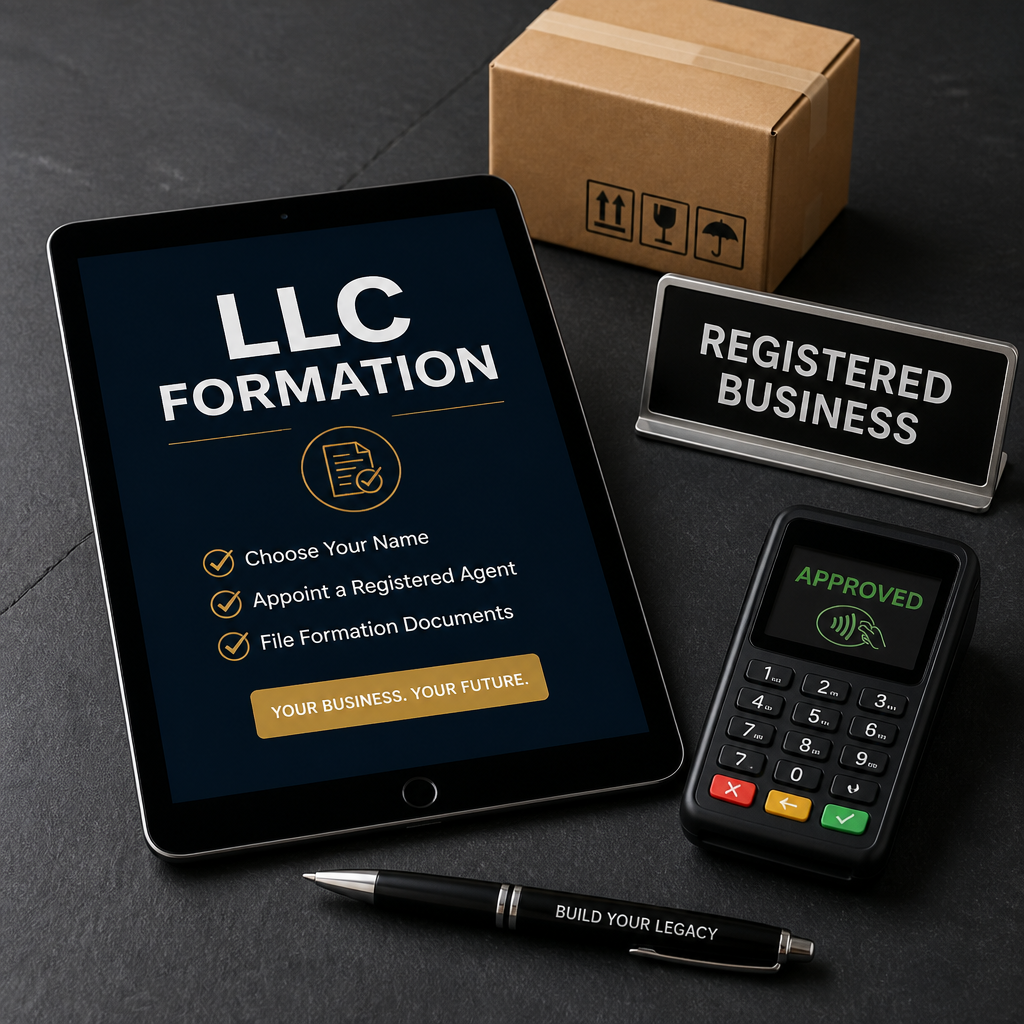
Step 1: Choose a Business Name
Your cleaning business name must be unique within your state and must include LLC, L.L.C., or Limited Liability Company. Before finalizing a name, check your Secretary of State business name database for availability. It is also prudent to check whether the name is available as a domain name and on social media platforms.
Step 2: Designate a Registered Agent
Every LLC is required to designate a registered agent with a physical street address in the formation state. The registered agent receives legal documents, tax notices, and official government correspondence on behalf of the business during regular business hours.
Step 3: File Articles of Organization
The Articles of Organization is the formal document filed with the Secretary of State to create your LLC. Filing fees vary by state, ranging from approximately $50 to $500 depending on the state of formation.
Step 4: Create an Operating Agreement
While most states do not legally require an operating agreement, it is recommended even for single-member cleaning businesses. An operating agreement establishes the ownership structure, management procedures, and operational guidelines for your LLC. A well-drafted operating agreement helps maintain the legal separation between personal and business assets.
Step 5: Obtain an EIN from the IRS
An Employer Identification Number is required to open a business bank account, hire employees, and file business taxes. The IRS provides EINs at no cost. Apply for an EIN on the IRS website.
Step 6: Open a Business Bank Account
Commingling personal and business funds can jeopardize your liability protection, a legal concept known as piercing the corporate veil. Open a dedicated business bank account and run all cleaning business income and expenses through it.
Step 7: Register for State and Local Taxes
Depending on your state and locality, your cleaning business may be required to register for sales tax, payroll tax, or local business taxes. Check with your state Department of Revenue and local tax authorities for specific requirements in your area.
Step 8: Obtain Required Licenses and Permits
Cleaning businesses often require local business licenses. Check with your city and county clerk offices for general business license requirements. For specialized cleaning services such as post-construction cleanup or biohazard cleaning, additional permits or certifications may apply. See our general business license requirements guide.
Cleaning Industry Specific Requirements
Insurance and Bonding
Most commercial cleaning contracts require general liability insurance and may require bonding. Even if not required, liability insurance is strongly recommended given the nature of cleaning work. Workers' compensation insurance is generally required by state law if you have employees.
Chemical Handling and OSHA Compliance
Cleaning businesses that use commercial cleaning chemicals are subject to OSHA Hazard Communication Standard requirements. This includes maintaining Safety Data Sheets for all cleaning chemicals and proper labeling of secondary containers. If your cleaning business works on construction sites, additional OSHA construction standards may apply.
See our guide on forming an LLC for a construction company, which shares some compliance overlaps with cleaning businesses working on job sites.
EPA and Environmental Regulations
Certain commercial cleaning activities may trigger EPA regulations, particularly if your business handles or disposes of hazardous cleaning materials. Check the EPA guidelines for your specific cleaning services.
Cleaning Business Tax Considerations
Self-Employment Tax
Single-member LLC members are subject to self-employment tax of 15.3 percent on net business income, which covers Social Security and Medicare contributions. As your cleaning business grows, you may want to consult a CPA about whether an S Corp election could reduce your overall tax burden.
Deductible Business Expenses
Common deductible expenses for cleaning businesses include cleaning supplies and equipment, vehicle expenses for travel between job sites, marketing and advertising costs, business insurance premiums, and home office deductions if you maintain a qualifying home office for your cleaning business.
Next Step Filings is not a tax advisor. Consult a qualified tax professional regarding the tax implications of cleaning business expenses and entity structure.
Insurance for Cleaning Businesses
General liability insurance protects your business against claims of bodily injury or property damage caused by your cleaning services. Commercial property insurance covers your cleaning equipment and supplies if they are stolen or damaged. Workers' compensation insurance is required in most states if you have employees.
Read our guide on business insurance for LLCs for a broader overview of coverage types.
How to Find Cleaning Contracts
Commercial Cleaning Contracts
Office buildings, medical facilities, retail stores, and educational institutions regularly contract with cleaning services. Approach property management companies directly, register as a vendor with your local government procurement office, and list your business on commercial vendor platforms.
Residential Cleaning Clients
Build a residential client base through local advertising, online platforms like Nextdoor, referral programs, and partnerships with real estate agents who need move-in and move-out cleaning services for their clients.
Specialized Cleaning Niches
Specialization can differentiate your cleaning business in a competitive market. Post-construction cleanup, Airbnb and vacation rental turnover, hoarding cleanup, and commercial kitchen cleaning are examples of specialized niches that often command higher rates.
Common Questions About Cleaning Business LLCs
Do I need an LLC to open a cleaning business?
No, you can operate as a sole proprietor. However, an LLC provides valuable personal liability protection against lawsuits arising from accidents, property damage, or contract disputes that are inherent risks in the cleaning industry.
How much does it cost to form an LLC for a cleaning business?
State filing fees range from approximately $50 to $500 depending on the state of formation. Next Step Filings offers cleaning business LLC formation with a $0 base fee plus state filing costs, which includes a free year of registered agent service.
Can I form an LLC if I clean houses and offices?
Yes, residential and commercial cleaning services are both eligible for LLC formation. If you operate in multiple states with offices or employees in multiple locations, foreign qualification may be required in each state.
Do I need an EIN for my cleaning business?
Yes, even if you are the only member, an EIN is required to open a business bank account. See our guide on how to get an EIN for your LLC.
What insurance does a cleaning business LLC need?
General liability insurance is recommended for all cleaning businesses. Workers' compensation is required in most states if you have employees. Surety bonds may be required by certain commercial clients or local licensing authorities.
Disclaimer: This informational guide provides general information about forming an LLC for a cleaning business. Next Step Filings provides business filing services and is not a law firm, accounting firm, or insurance advisor. For advice specific to your cleaning business, consult with qualified legal, tax, and insurance professionals.
Lisa Matthews is the General Manager and Business Compliance Advisor at Next Step Filings, where she helps entrepreneurs navigate the process of business formation and compliance.
Subscribe to the NextStepFillings Updates